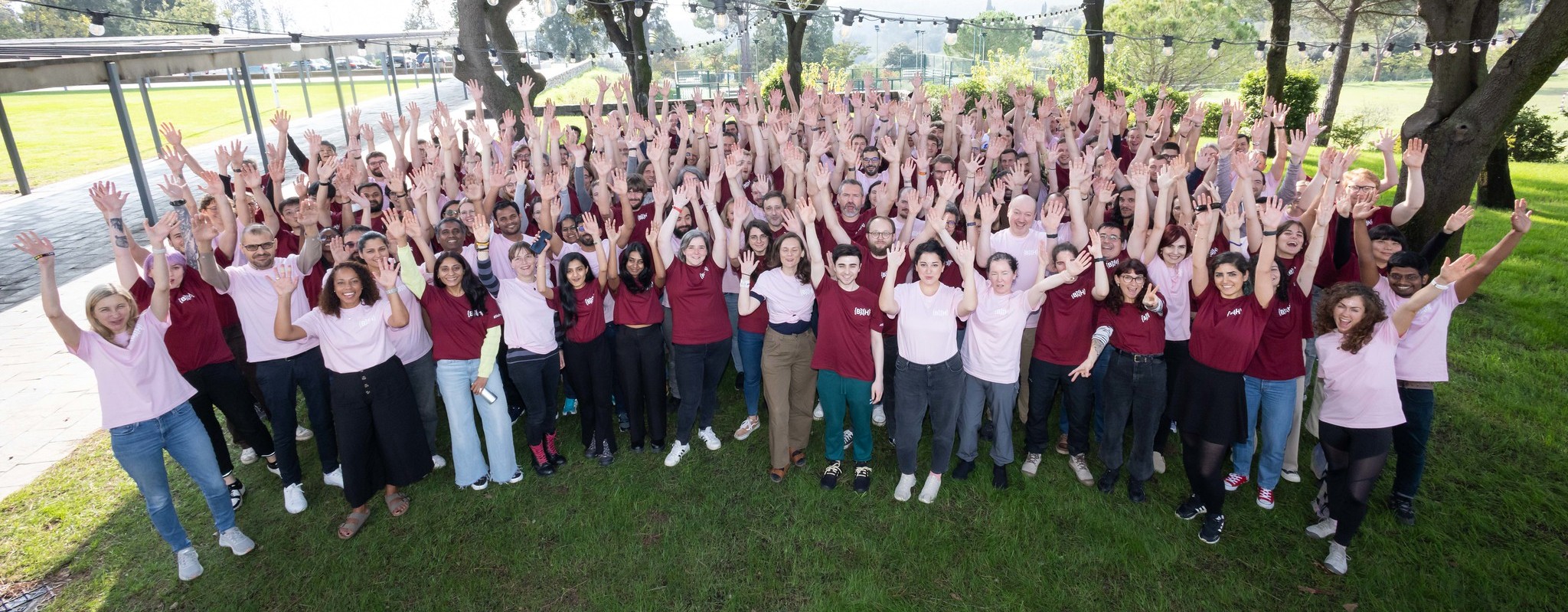
Today, a global community of hackers gathers in Berlin for the start of ELIXIR’s eighth annual BioHackathon Europe. Since the first event, inspired by the Database Center for Life Science (DBCLS) BioHackathon in Japan, over 2200 participants have gathered together for an intense week of collaboration to advance 275 projects.
Hackathons are focused working meetings where participants develop solutions through joint design, coding, testing and documentation. Biohackathons bring together software developers, technicians, bioinformaticians and life scientists to work in teams on complex challenges that benefit from a broad mix of skills and perspectives.
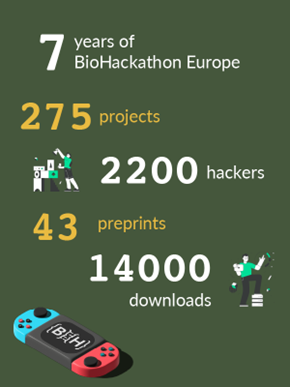
Since 2019, biohackathon participants have been able to publish the outcomes of their projects through BioHackrXiv, a preprint server created by DBCLS and ELIXIR specifically for hacks, sprints and codefests in the life sciences. The platform allows participants to share work in progress, making it easier for others in the community to reuse and build on the initial results. To date, 43 preprints have been published on the outcomes of BioHackathon Europe projects, with a combined total of over 14,000 downloads – clear evidence of their value and influence. The two most popular papers are Knowledge graphs and wikidata subsetting (2020) with 1268 downloads and Infrastructure for synthetic health data (2022) with 1087 downloads.
Organising a biohackathon is a significant undertaking, involving months of preparation and substantial financial investment. In 2020, the BioHackathon Europe project Measuring outcomes and impact from the BioHackathon Europe explored the impact of the event using three methods: post-event surveys, publication tracking and GitHub activity analysis.
Responses to the survey question, ‘Without the BioHackathon, how long would it have taken a single person with all the skills to reach the same outcome?’ were used to estimate how much time was saved by the 2019 event. This figure, called the ‘acceleration effect’, was found to be 5.6 times higher than the amount of time invested in the event by participants. Accounting for event costs (for example, venue hire and organiser time), the authors estimated an acceleration of at least three fold.
Although measuring impact through outputs and time savings provides valuable evidence, many of the most important effects of a biohackathon are harder to quantify. New collaborations formed during the week can grow into joint projects or long-term partnerships, skills gained may influence future research directions and ideas sparked in side conversations can lead to new tools or services. As BioHackathon Europe 2025 gets underway, it’s clear that the connections formed, concepts explored and code developed during the week will have an impact long after the hackers have returned home.
- See the BioHackathon Europe 2025 website and video
- Read the BioHackathon Europe 2024 report